
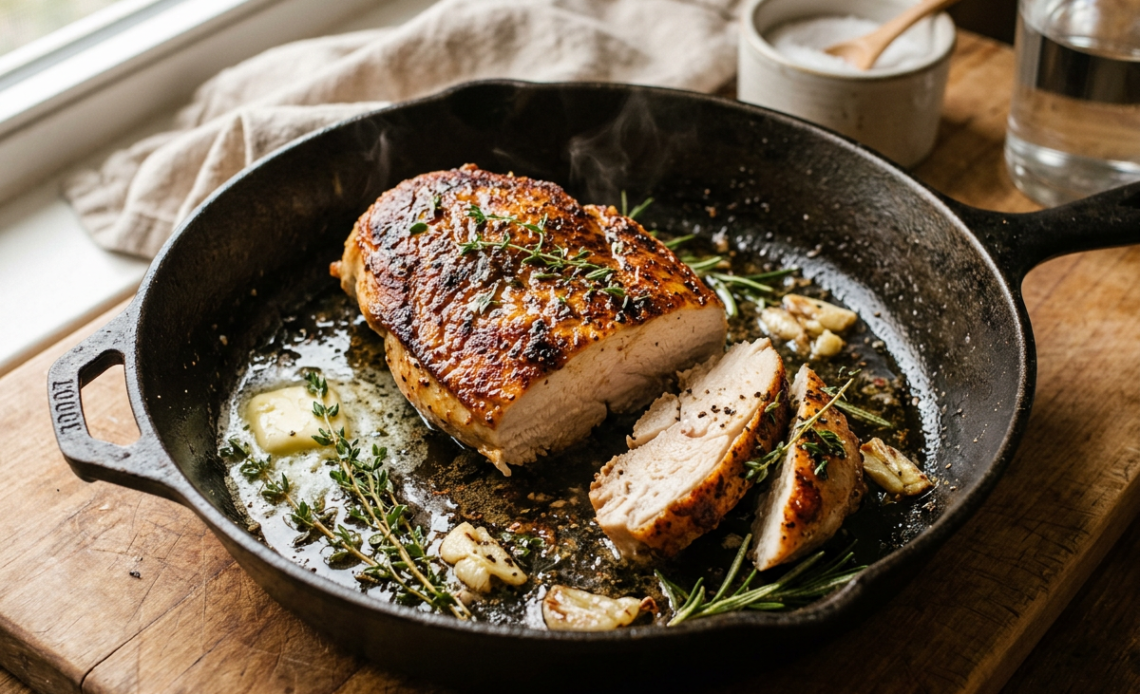
Chicken breast is suffering from a bad reputation. If you ask most people about the result of their
cooking they’ll constantly give you the same answer: it ends up dry. The fault isn’t in the chicken at all
— it’s almost always down to the method. If you cook it in a weak pan using uneven heat, you’ll have to
guess until finally you cut into it and find out only at a late stage.
A cast iron skillet solves this problem. It distributes heat evenly, produces a deep golden crust on the
outside by searing it, and cooks the inside in such a way that the chicken remains juicy right across all
its edges. This recipe shows in detail how to achieve that result every single time, using nothing more
than a hot pan, some butter, and a few simple aromatics
Why Cast Iron Makes the Difference
Most household stoves have hot spots — parts of the pan that become hotter than other areas. Thin
nonstick or stainless steel pans exaggerate this issue, which is why chicken tends to cook unevenly,
with one side becoming charred and the other remaining pale and undercooked.
Cast iron avoids this because, once properly preheated, it retains and distributes heat much more
evenly. Moreover, when cold chicken is placed in the pan, it holds its temperature rather than dropping
suddenly the way thinner pans do. It’s this steady heat that enables a deep, even sear on the outside
while the inside cooks through gently instead of seizing up and drying out.
Another benefit is the finish itself. Since cast iron is oven-safe, you can begin cooking the chicken on
the stovetop to form a crust and then place it directly into the oven to finish cooking — no flipping back
and forth, and no guessing.
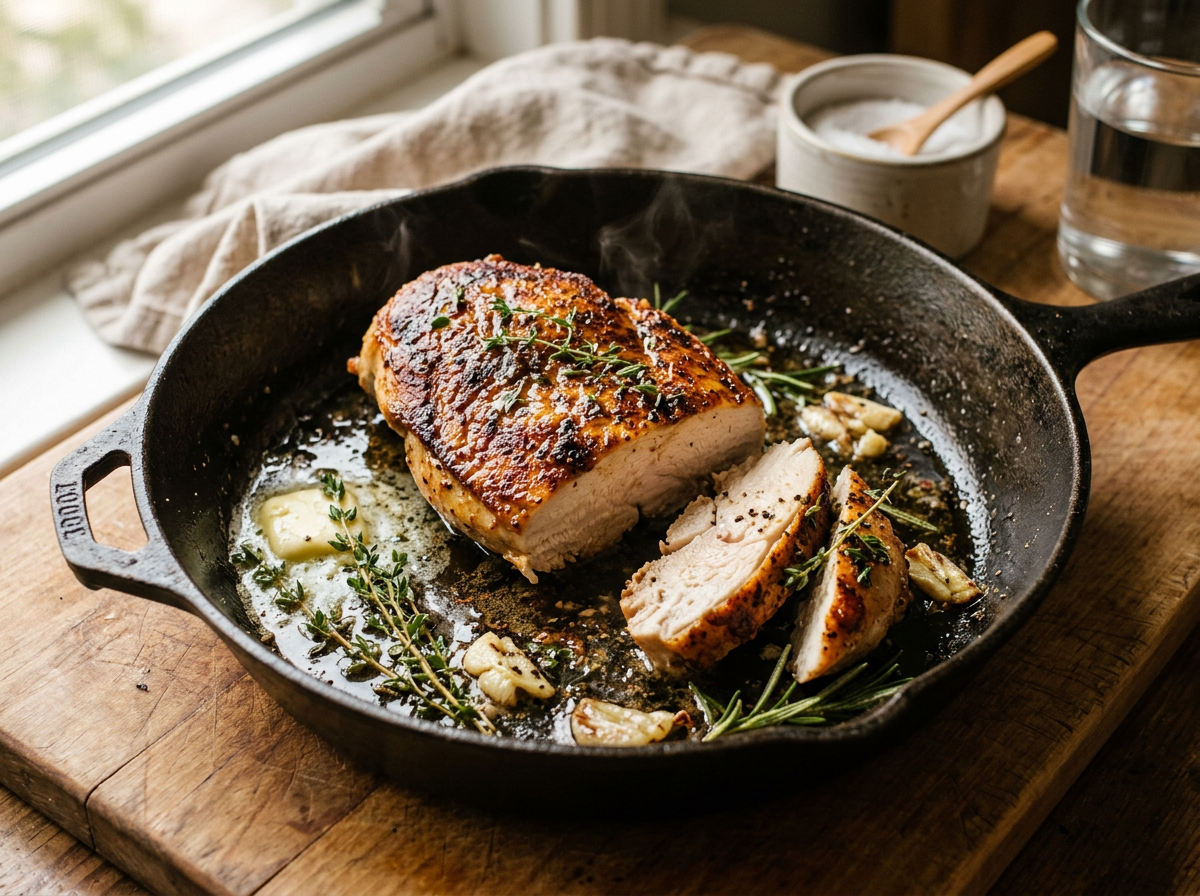
Cast Iron Skillet Chicken Breast (Juicy Every Time)
Ingredients
Method
- Bring the chicken to room temperature by removing it from the fridge about 20 to 30 minutes before
- cooking. Cold chicken placed in a hot pan sears on the outside before the inside has time to catch up.
- Pound it to an even thickness. Chicken breasts are naturally thicker at one end than the other, which
- is one of the main reasons they cook unevenly. Place the chicken between two sheets of plastic wrap
- and gently pound the thicker end until the whole breast is about the same thickness throughout.
- Season generously. Pat the chicken dry with a paper towel, since a dry surface sears far better than a
- moist one. Season both sides generously with salt and pepper.
- Preheat the skillet properly. Place the cast iron skillet over medium-high heat and let it heat for a full 3
- to 4 minutes before adding anything. Add the olive oil once the pan is hot, not before — it’s ready
- when the oil shines slightly.
- Sear without moving it. Lay the chicken breasts in the pan and leave them alone. Let them sear
- undisturbed for 5 to 6 minutes until a deep golden crust forms underneath.
- Flip the chicken, then add the butter, crushed garlic, and thyme or rosemary to the pan. As the butter
- melts, tilt the pan slightly and spoon the melted butter over the chicken a few times — this bastes the
- top and adds flavour as the second side sears.
- Finish to temperature. Cook for another 5 to 7 minutes, depending on thickness, until the internal
- temperature reaches 165°F (74°C) at the thickest part. If it’s browning too quickly before cooking
- through, lower the heat slightly or transfer the skillet to a 375°F oven for the final few minutes.
- Rest before slicing. Move the chicken to a plate and let it rest for 5 minutes. This step is easy to skip
- but makes a real difference — resting lets the juices redistribute through the meat instead of spilling
- out when you slice into it.
- ● Don’t skip pounding the chicken to an even thickness — this one step prevents more dry, overcooked
- chicken than any other change you can make.
- ● Use a meat thermometer rather than judging doneness by cut or colour. Guessing is the biggest
- cause of overcooked chicken.
- ● Let the pan fully preheat before adding the chicken. A pan that isn’t hot enough won’t sear properly,
- and the chicken will steam instead of brown.
- ● Baste with butter in the final minutes to add both flavour and a glossy, restaurant-style finish.
- Easy Variations
- ● Lemon-herb: add a squeeze of lemon juice and a little lemon zest along with the herbs for a brighter
- finish.
- ● Spicy: add a pinch of smoked paprika or cayenne to the seasoning before searing.
- ● Garlic parmesan: stir a tablespoon of grated parmesan into the butter as it melts for a richer, savoury
- crust.
- ● One-pan meal: after removing the chicken, add vegetables like asparagus or cherry tomatoes to the
- same skillet and sauté them in the leftover butter and drippings
Notes