

Chicken thighs are one of the easiest cuts to cook for dinner as they’re very forgiving and will stay juicy even if you do cook them a bit too long. This sheet pan version uses bone in, skin on thighs rubbed with garlic and herbs which are then roasted on top of the potatoes until the skin is crisp. It’s pretty much 10 minutes prep and one pan. The variations below make it into five different dinners.
What are Chicken Thigh Dinners?
Chicken thigh dinners are essentially meals centred on the thigh meat (the darker, richer part of the chicken leg). Thighs have more fat and more connective tissue than breasts so they tend to stay moist and tender when roasted, seared or braised. Bone in, skin on thighs will give you the most flavour and a crisp skin. Boneless, skinless thighs will cook much more quickly and are ideal for a quick weeknight meal.
Why You’ll Love This Recipe
•One sheet pan, so cleanup is quick
•Crisp skin and juicy meat from a simple rub
•Potatoes cook in the chicken juices and pick up extra flavour
•Hard to overcook compared with chicken breast
•Budget-friendly cut that feeds a family
•Easy to change with five quick flavour variations
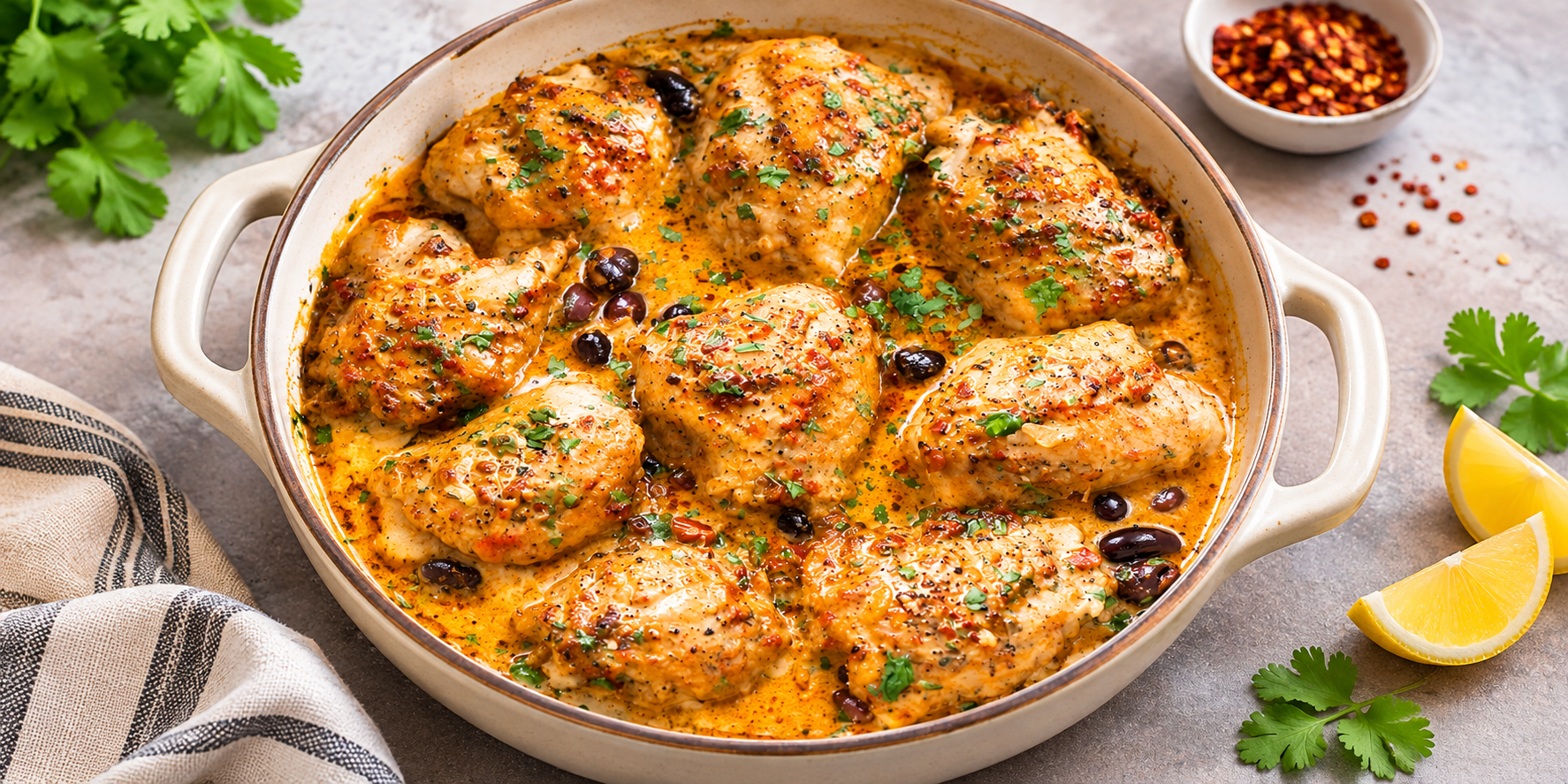
Chicken Thigh Dinner Recipes: Crispy Garlic Herb Sheet-Pan Chicken Thighs (Ready in 55 Minutes)
Ingredients
Method
- Preheat to 425°F (220°C) and place a rimmed sheet pan in the oven while it’s heating.
- Toss the halved potatoes with the olive oil, salt and pepper and spread them cut side down in the hot pan. Roast for 10 minutes.
- Pat the thighs very dry with paper towels. Dry skin is what makes it crisp.
- Mix the garlic, thyme, paprika, salt, pepper and 1 tbsp of oil. Rub it over the thighs and under the loosened skin.
- Place the thighs skin side up in the pan with the potatoes and the lemon wedges.
- For 35 to 40 minutes until the skin is deep golden and the thickest part has reached at least 165°F (74°C). Thighs are best at 175°F (80°C) or above.
- Rest the chicken for 5 minutes then squeeze the roasted lemon over everything and add the parsley.
- Dry the skin thoroughly as moisture will stop it crisping.
- Don’t crowd the pan. Leave room so the food has a chance to roast rather than steam.
- Use a thermometer. Chicken is safe at 165°F (74°C) but thighs are more tender at 175°F (80°C) and above.
- Start the potatoes first as they need a head start to cook through.
- Rest before serving. The juices will settle back into the meat.
- Match the cooking time to the size. Large thighs will take up to 45 minutes.
- Roasted potatoes are already on the pan so a green salad, steamed green beans or roasted broccoli would be good. Rice with a squeeze of lemon is also very good with the juices. For a larger meal you could add some warm bread to mop up the pan juices.
- Honey garlic: 2 tbsp honey, 2 tbsp soy sauce and 3 garlic cloves (minced), brush on for the final 10 minutes.
- Lemon pepper: substitute the paprika and thyme for 1 tbsp lemon zest and a good bit of black pepper.
- •BBQ: brush with the barbecue sauce in the final 10 minutes.
- Boneless skinless thighs: 1 1/2lb, roast at 425°F (220°C) for 20 to 25 minutes.
- Air fryer: bone in thighs at 380°F (195°C) for about 25 minutes, flip once and cook until they reach 175°F (80°C).
- Store any leftovers in a sealed container in the fridge for up to 4 days. Reheat in a 375°F (190°C) oven for 15-20 minutes to restore the crisp skin (microwave is an option but will soften the skin). Cooked thighs can be frozen for up to 3 months and will thaw overnight in the fridge. Chicken should never be left out for more than 2 hours.
- Bone in, skin on take 35-45 minutes at 425°F (220°C). Boneless, skinless take 20-25 minutes.
- 165°F (74°C) is the safe minimum but they’re more tender at 175°F (80°C) and above.
- Bone in, skin on thighs give you more flavour and of course the crispy skin. Boneless thighs are quicker and better if you’re just after a quick meal.
- The skin was wet, the pan was too full or the oven wasn’t hot enough. Dry the skin well and use 425°F (220°C).
- Yes. Season them and refrigerate for up to 24 hours. Just pat the skin dry before roasting.
Notes