
One of the most useful things you can learn in the kitchen is a reliable recipe for shortcrust pastry; it is the buttery, crisp and crumbly dough used in classic fruit pies, jam tarts, quiches and savoury pasties. After you have worked out how to make it, you’ll never have any need to buy ready-made dough once more. The most appealing aspect is its simplicity: all you need are four basic ingredients, about 10 minutes of hands-on effort, and no special skills whatsoever. The guide shows you all the steps and includes advice on how to keep the pastry tender, golden, and free from shrinking or cracking.
What Is Shortcrust Pastry?
Shortcrust pastry is a simple dough consisting of flour, fat and a small quantity of cold water; the term ‘short’ has nothing to do with size. In the context of baking it means that the dough ends up being crumbly and tender since the fat covers the flour and prevents the development of gluten. This is the reason why a good shortcrust snaps and melts in the mouth rather than being chewy.It is different from puff pastry, which consists of a number of thin, flaky layers, and from choux pastry, which is a cooked and airy dough; shortcrust is strong enough to contain fillings and this is why it is ideal for use in both sweet and savoury pastries.
Why You’ll Love This Shortcrust Pastry Recipe
The only four main ingredients are flour, butter, salt, and cold water. Easy for beginners; there’s no need to roll it in layers or to fold it in a complicated way. You can use it for pies, tarts, quiches, and hand pies. Good to prepare in advance; it chills and freezes well. Crisp and buttery, with a flavour much better than that of store-bought pastry
Shortcrust Pastry Recipe: Buttery, Crisp & Easy to Make
Ingredients
Method
- Make sure that your butter and the water are as cold as you can keep them. Using cold
- butter will give a tender and crumbly texture. When your kitchen is warm, put the flour
- bowl in the refrigerator for fifteen minutes before you begin.
- Take the flour and salt and whisk them together in a big bowl. Then add the cold cubed
- butter and, using your fingertips, rub it into the flour while lifting the mixture as you go to
- keep it cool. Keep on doing this until the mixture resembles coarse breadcrumbs, with a
- few pieces of butter about the size of peas still left over. Alternatively, you can pulse it in
- a food processor for around 10 seconds.
- Mix in 4 tablespoons of ice-cold water and stir using a knife or a fork. Add the water one
- spoonful at a time until the dough just starts to come together. When you squeeze a
- handful and it holds its shape, then it is ready. If you use too much water the pastry will
- become tough and is likely to shrink.
- Place the dough on a clean surface and gently press it into the shape of a ball without
- kneading it. Then flatten it into a disc that is about 1 inch thick and wrap it tightly in
- plastic wrap.
- The dough should be refrigerated for at least 30 minutes or for a maximum of two days;
- resting does this by relaxing the gluten, which in turn stops the pastry from shrinking in
- the oven and makes it easier to roll.
- If the dough seems rather hard, then leave it at room temperature for 5 to 10 minutes.
- Flour the surface lightly and then roll the dough from the centre outwards, turning it a
- quarter of a turn after each roll, until it is roughly ⅛ inch (3 mm) thick.
- Loosely roll the pastry around the rolling pin and then unroll it onto a 9-inch tart or pie tin.
- Gently press it into the corners and along the fluted edges before trimming away the
- excess. Prick the base with a fork and then chill it for another 20 minutes.
- If you want the base of your filling to be crisp, then prebake the pastry case. Place
- parchment paper in it, add some baking beans or rice and bake it in the oven at 375°F
- (190°C) for 15 minutes. Take out the paper and the weights and then bake for an
- additional 8 to 10 minutes until it is pale golden.
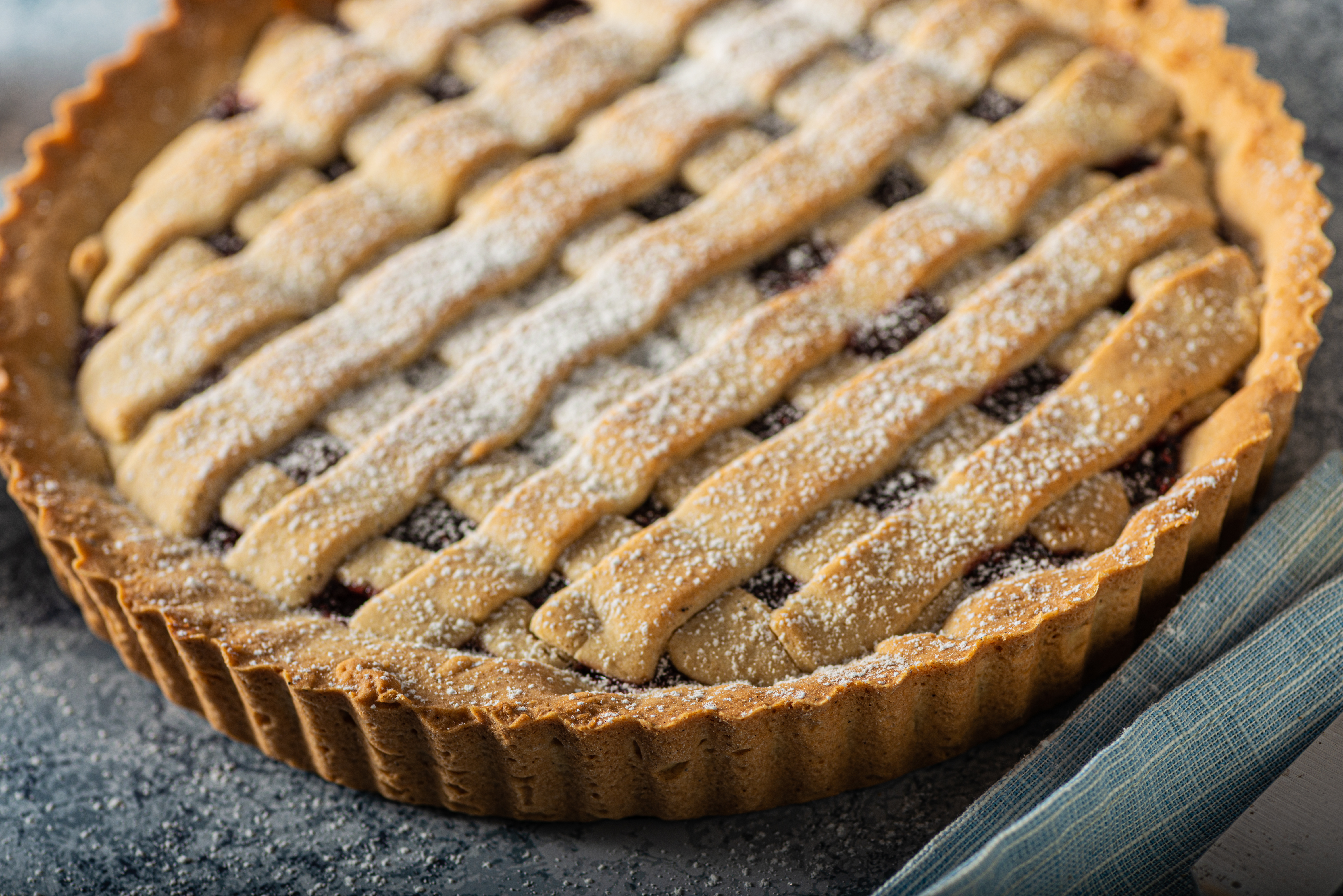
- To make a pie or tart such as the one in the photo, take a second amount of dough, cut it
- into strips approximately ¾ inch wide, and lay them over the filling in a criss-cross
- pattern. Finish off the ends, press them onto the edge, and then sprinkle the baked tart
- with a little powdered sugar. It appears impressive and is simpler than it seems.
- Make sure that everything remains cold since warm butter will melt into the flour and
- cause the dough to become greasy.
- Treat it gently, since overworking causes gluten to form and results in a tough pastry.
- Use water that has been chilled. Measure it using a glass which contains ice cubes.
- You must always rest the dough, since this will prevent shrinkage and cracking.
- Bake on a hot tray and put the tin onto a baking sheet which has been preheated for a
- crisp bottom.
- Spread an egg wash over it. Using a beaten egg results in a shiny, golden finish.
- A metal tin should be used since it conducts heat better than glass and this results in a
- crisp base.
- The pastry decreased in size when it was in the oven because the dough had been
- stretched or had not been rested. Make sure to chill it well and then gently place it into
- the tin without tugging.
- It is too brittle for rolling and requires a bit more water, so add the water one teaspoon at
- a time.
- It’s difficult; either it had been overworked or it contained too much water.
- The bottom is soggy; therefore, you should first blind bake the case and then brush it
- with beaten egg to seal it.
- It broke when I picked it up; the dough was too cold. Wait a few minutes for it to warm
- up, then use bits to repair any tears.
- Sweet: Apple pie, jam tart, lemon tart, pecan pie, or a berry crostata
- Savory: Quiche Lorraine, chicken pot pie, meat pies, or vegetable tarts
- Small bites: Hand pies, mini tartlets, or sausage roll bases
- Simple cookies: Re-roll scraps, sprinkle with cinnamon sugar, and bake until golden
- Wrap the dough securely and store it for a maximum of two days.
- You can freeze the dough disc for a maximum of three months and then thaw it overnight
- in the refrigerator, or else you can freeze the rolled pastry cases in their tins and bake
- them afterwards.
- Baked pastry cases should be stored in a sealed container at room temperature for two
- days.
- Certainly, butter provides the best taste; a combination of equal parts butter and
- shortening results in a dough that is both very tender and flaky.
- Yes indeed, all you need is your fingertips and a bowl.
- Use a flour blend that is gluten free and include some xanthan gum, then add a bit more
- water. Handle the dough with care since it is more sensitive.
- All-purpose flour works perfectly, while pastry flour produces an even more tender result.
- Do I need to bake the crust first?
- With regard to dishes that are wet, such as quiche or custard, yes; but for jam tarts and
- fruit pies it is usually optional