
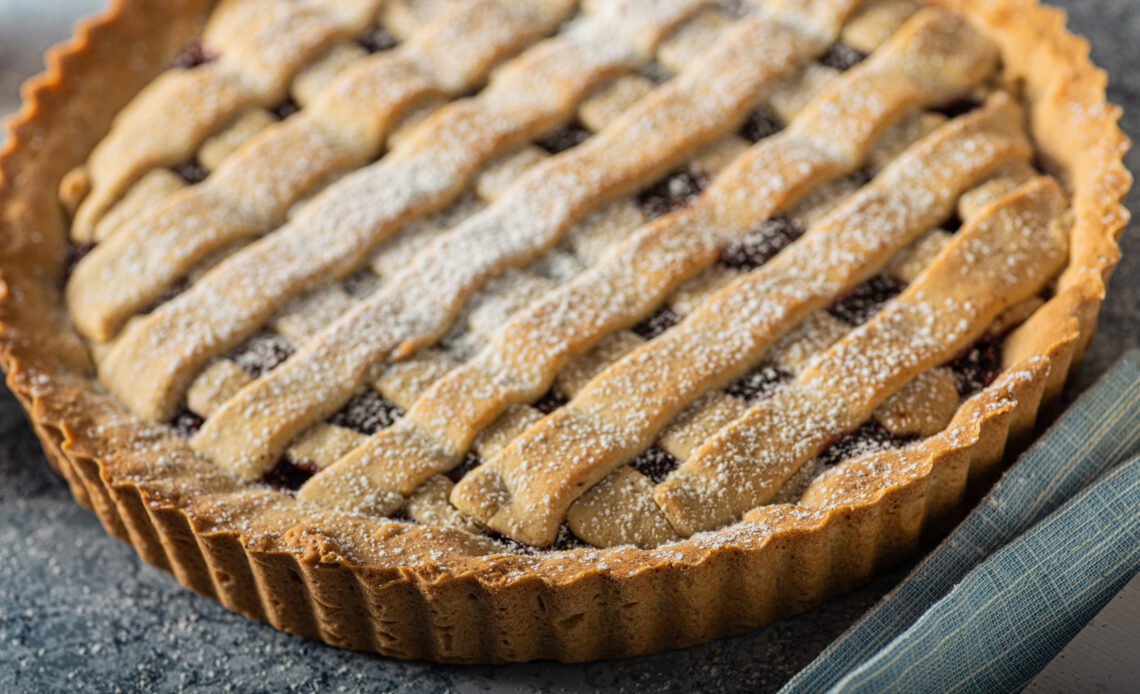
This is a very simple shortcrust pastry recipe using just 4 ingredients and taking about 15 minutes of actual hands on time. It bakes up as a crisp, buttery, crumbly crust which holds its shape so is ideal for both sweet and savoury pies (quiches etc). You don’t need any special equipment at all, just a bowl, your fingers and a bit of patience in the fridge.
What Is Shortcrust Pastry?
Shortcrust pastry is the classic basic pastry (flour, fat and a little cold water) and the word “short” refers to the texture. The fat coats the flour and stops gluten forming so you end up with a tender, crumbly rather than chewy pastry.
It’s not laminated like puff pastry so there’s no folding or layering at all. That’s one of the easiest pastries for a novice to work with. It’s the traditional base for apple pie, quiche Lorraine, lemon tart, mince pies and all the various savoury pies.
Why You’ll Love This Recipe
Only 4 basic ingredients, all pantry and fridge staples
Ready in about 15 minutes of active work, plus chilling
Works for both sweet and savoury dishes
Rolls out easily and holds its shape in the oven
Bakes crisp and golden without a soggy bottom
Freezes beautifully, so you can make it ahead
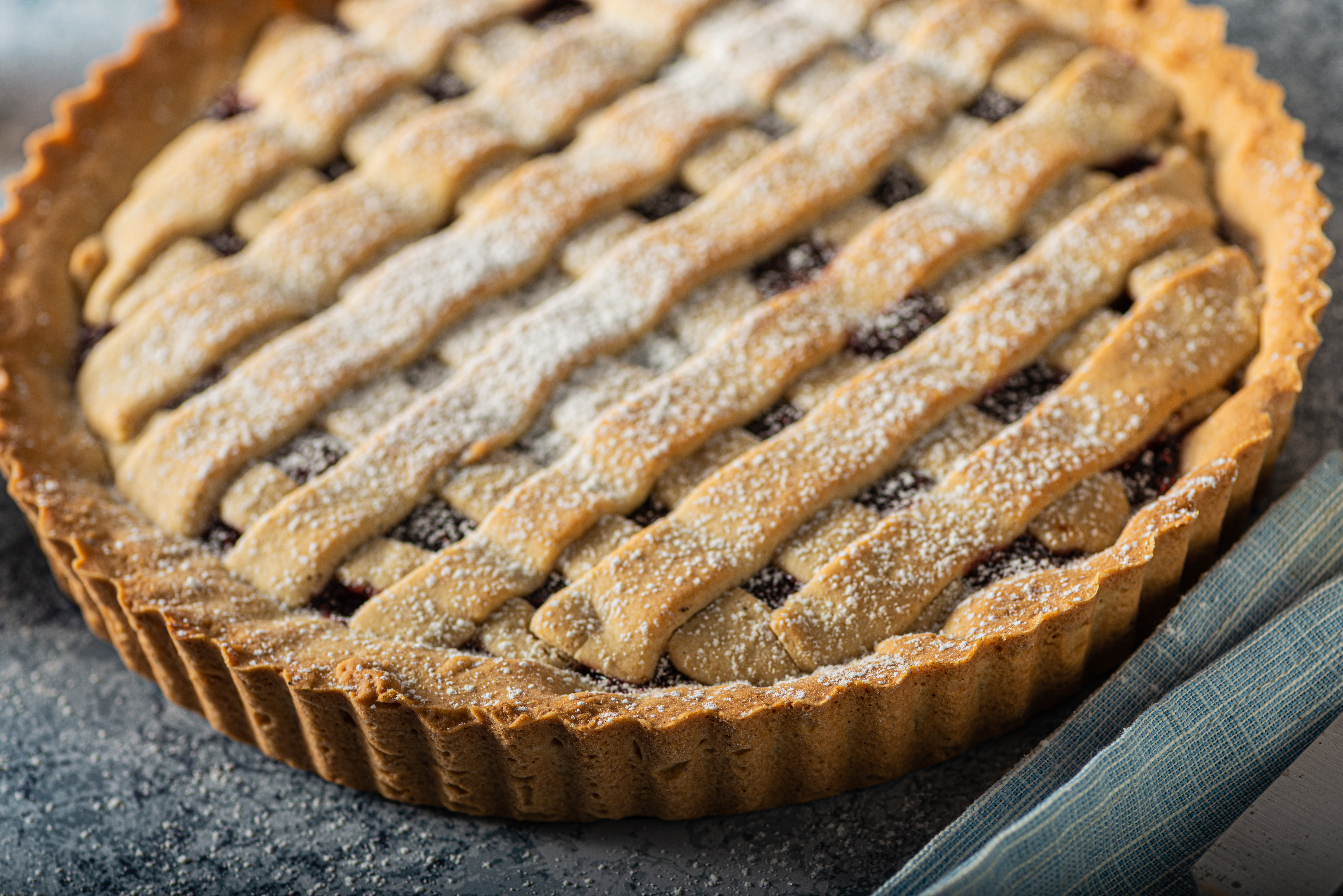
Shortcrust Pastry Recipe: Easy Homemade Buttery PastryMeta
Ingredients
Method
- Put the flour and salt (and sugar if it’s a sweet pastry) into a large bowl and stir them together.
- Add the cold cubed butter and using your fingertips rub it into the flour, lifting the mixture as you go to keep it cool. Continue until it resembles fine breadcrumbs with no large lumps.
- Sprinkle in 2 tbsp of ice-cold water and mix with a knife or fork. Add more at a time (a tsp at a time) until it starts to clump together. You’re looking for a dough that sticks together but isn’t sticky.
- Form the dough, gently press it into a ball and then flatten it into a disc. Don’t knead it at all as over working will develop the gluten and result in a tough pastry.
- Chill the dough. Wrap the disc in cling film or baking paper and put it in the fridge for at least 30 minutes. This relaxes the gluten and firms up the butter which will stop it shrinking.
- Roll it out. On a lightly floured surface roll the dough to about 3mm (⅛ inch) thick, rotating it a quarter turn between rolls to keep it even. Roll to roughly 5cm (2 inches) wider than your tin.
- Line the tin. Drape the pastry over your rolling pin and get it into the tin. Press it gently into the corners and trim the excess. Prick the base all over with a fork and chill for another 15 minutes.
- Blind bake. Preheat the oven to 180°C (160°C fan / 350°F). Line the pastry with baking paper, fill with baking beans or rice and bake for 15 minutes. Take out the paper and beans and then bake for a further 5 to 10 minutes until pale golden. Then fill and bake as your recipe instructs.
- Keep it all cold. Cold butter and ice water are the secret to a crisp, flaky result. On a hot day you’ll want to chill your bowl and your flour for 10 minutes first.
- Work quickly and lightly. Warm the hands to melt the butter. Just use your fingertips and stop as soon as you get to the breadcrumb stage.
- Don’t add too much water as this will make the pastry tough and cause it to shrink. Add it slowly.
- Never skip the chill. Resting the dough is the best way to prevent it from shrinking in the oven.
- Blind bake if you’re using a wet filling. For quiches and custard tarts in particular, blind baking is essential to achieve a crisp base and to avoid a soggy bottom.
- Brush with an egg wash. As an extra precaution you could brush the blind-baked case with beaten egg and then bake for 2 minutes to seal it.
- Shortcrust pastry is a base, so what you serve depends on the filling:
- Savoury pies and quiches: a crisp green salad, roasted vegetables or buttery new potatoes
- Chicken or beef pies: creamy mashed potatoes and steamed peas
- Fruit pies and tarts: vanilla ice cream, custard or softly whipped cream
- Lemon or custard tarts: fresh berries and a dusting of icing sugar
- Sweet shortcrust: 2 tbsp sugar and 1 tbsp of water replaced with 1 egg yolk for a richer, more biscuit-like pastry.
- Wholemeal pastry: simply substitute half the plain flour with wholemeal flour for a nutty taste.
- Herb pastry: add 1 tbsp of chopped thyme or rosemary for the savoury pies.
- Cheese pastry: 50g of finely grated mature cheddar to the flour for quiches and cheese straws.
- Food processor method: pulse the flour, salt and butter until crumbly, then add the water and pulse just until it all comes together.
- Dairy free: use a firm plant based block butter instead of dairy butter.
- Raw dough (in the fridge): wrap tightly and keep for up to 3 days.
- Raw dough (freezer): freeze the wrapped disc for up to 3 months and thaw overnight in the fridge prior to rolling.
- Lined tins: freeze the unbaked pastry cases in the tin and then bake from frozen (add a few minutes to the blind baking time).
- Baked pastry cases: store in an airtight container at room temperature for up to 2 days.
- Reheating: reheat your baked tarts or pies in a 160°C (320°F) oven for 8 to 10 minutes to restore crispness. Don’t reheat in the microwave as this will soften the crust.
- Shrinkage is typically the result of overworking the dough or of having skipped the chilling. Handle the dough as gently as possible and chill it both before and after you line the tin.
- Too much water and too much handling will develop gluten. Use the minimum amount of water possible and avoid kneading.
- Yes, omit the added salt or just reduce it to a very small pinch.
- For wet fillings (quiche, custard, fruit curd etc) yes. For pies with a top crust and a cooked filling it’s often not necessary at all.
- Yes you can simply press the dough into the tin with your fingertips (a very handy trick for rustic tarts).
- Sweet shortcrust (pâte sucrée) contains sugar and will often have egg in it, resulting in a richer, more delicate texture which is ideal for use in desserts.
Notes