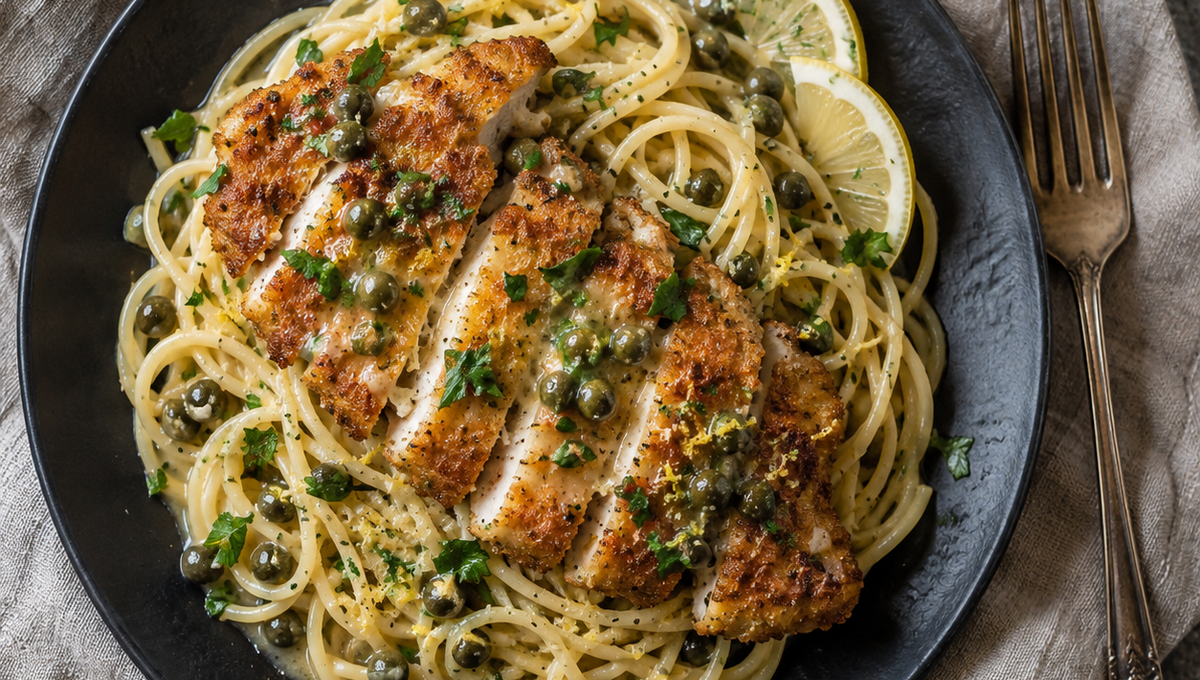
Ingredients
Method
How to Make Chicken Piccata Pasta
1 Start the pasta water.
- Begin by boiling a large amount of water that has been seasoned with salt,
- and then cook the pasta according to the directions on the package until it is just a little under al
- dente, as it will continue to cook in the sauce. Before draining the pasta, save a cup of the starchy
- water and put it aside.
2 Prep the chicken.
- Season both sides of the pounded cutlets with salt and pepper, then dip each
- piece into some flour and shake off any excess. Try to achieve a light and even coverage; if you use
- too much flour the sauce will end up gluey rather than silky.
3 Sear the chicken.
- Heat the olive oil in a large skillet over medium-high heat. When the oil starts to
- shimmer, add the chicken in a single layer, and if necessary carry out the addition in batches. Cook
- for 3 to 4 minutes on each side until it is golden and thoroughly cooked, then move it to a plate and
- cover it with foil.
4 Build the sauce base.
- Reduce the heat to medium and melt 1 tablespoon of butter in the same
- skillet; scrape up any bits that have browned at the bottom, as this enhances the flavour. Then add
- the garlic and cook it for approximately 30 seconds or until it smells fragrant.
5 Deglaze and reduce.
- Pour in the white wine and let it boil for a minute or two to burn off the sharp
- alcohol taste. Then add the chicken broth and lemon juice and simmer for 3 to 4 minutes until the
- sauce has reduced a bit and begins to thicken.
6 Finish the sauce.
- Stir in the capers and the final 2 tablespoons of butter and then allow the butter to
- melt until the sauce has a glossy appearance rather than a greasy one; if the sauce appears to be too
- thick, whisk in some of the reserved pasta water to thin it out.
7 Bring it all together.
- Add the drained pasta directly to the skillet and stir it around so that all the
- strands are covered with sauce, using some of the pasta water if necessary until the sauce becomes
- smooth and sticks to the noodles; cut up the chicken and put it back into the pan, then pour over some
- extra sauce.
8 Serve right away.
- Serve the dish immediately and then add the Parmesan, some fresh parsley, and
- a few extra slices of lemon if you desire. The piccata sauce tastes best when it is still shiny and warm.
Tips for Better Chicken Piccata Pasta
- Beat the chicken all over so that the thin parts don't cook too much while the centre remains
- undercooked.
- Don't leave out the pasta water — it helps the sauce stick to the noodles rather than separating.
- Keep the heat moderate once the butter goes in; boiling butter causes the sauce to break down and
- become oily rather than silky.
- •
- If you desire a milder and less salty flavour, rinse the capers for a short time.
- Taste before adding extra salt, since among the capers, the broth, and the Parmesan it usually
- doesn't require much.
Easy Variations to Try
- Creamy piccata pasta: stir in ¼ cup of heavy cream at the end for a richer, more velvety sauce.
- Shrimp piccata pasta: replace the chicken with large shrimp and sear them for one to two minutes
- on each side.
- Mushroom piccata: add sliced cremini mushrooms along with the garlic for an earthy, savoury
- flavour.
- Whole wheat or gluten-free: this recipe works with any shape of pasta — just alter the cooking time
- per the package instructions.
- Extra lemony: add a teaspoon of lemon zest together with the juice for a more intense citrus taste.
Storing and Reheating
- Leftovers can be kept in the fridge in a sealed container for a maximum of three days. To reheat them,
- place them in a skillet and warm them over low heat with a little chicken broth or water to thin the
- sauce. Although you can use the microwave when you're short on time, it may cause the sauce to
- separate. The dish is not suitable for freezing because cream and butter-based sauces tend to become
- grainy when they are thawed.
Notes
A green salad made simply and dressed with a light vinaigrette serves to counteract the richness of the sauce, and garlic bread is always good for absorbing any extra sauce; if you'd like something more substantial, roasted asparagus or sautéed green beans provides a fresh and crisp contrast to the pasta and chicken