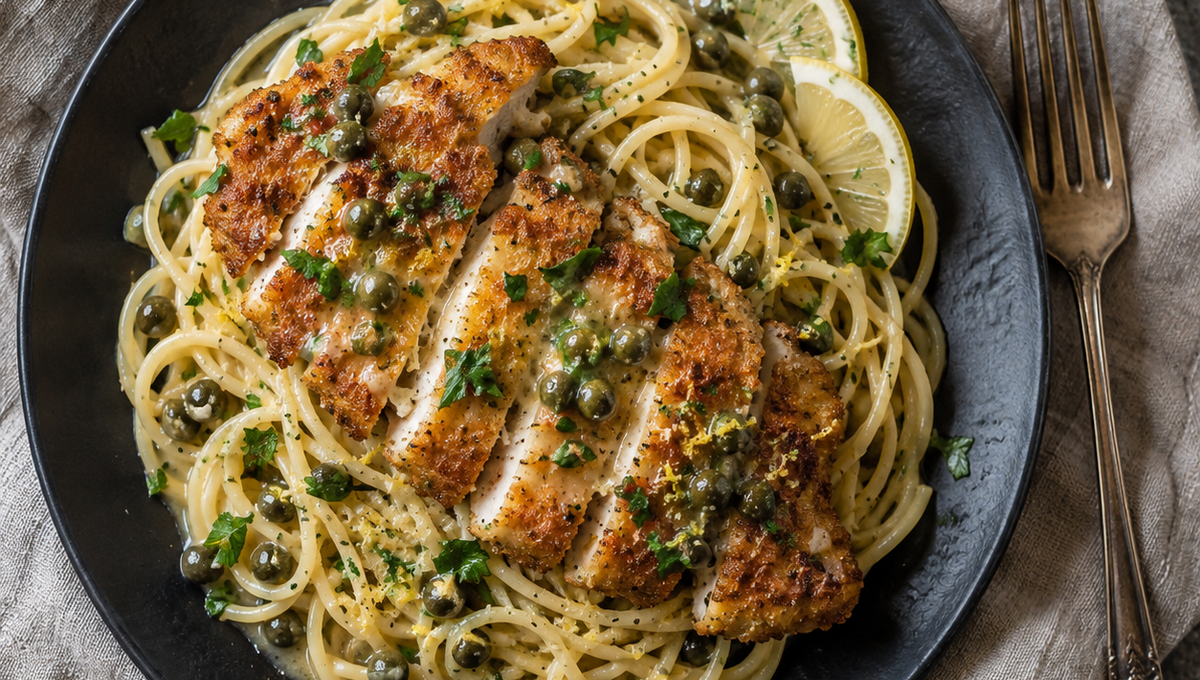
The scent of butter and garlic frying in a hot pan always gives the kitchen a warm, welcoming atmosphere. That’s the essence of Chicken Piccata With Angel Hair Pasta: thin, golden chicken cutlets in a vivid, tangy lemon-and-caper sauce, which are then mixed with the pasta so that each strand is covered with a flavour that you’ll want to eat directly from the spoon. It has the taste of a dish you’d choose at a restaurant, yet you can prepare it in less than 40 minutes using ingredients that you most likely already possess.
If you’ve ever eaten chicken piccata in an Italian restaurant and have then wondered about how thesauce ends up so shiny and well-balanced, the reason is simple: flour, butter, lemon juice, and a small amount of the starchy water from the pasta act together to achieve this. Adding capers gives the sauce a salty flavour, so that it sticks to the noodles rather than gathering at the bottom of the bowl. This rendition of classic piccata, which traditionally comes with only a small amount of pasta as a side dish, makes the sauce the main feature instead. In this version, the sauce is not merely an additional element — it is the highlight of the meal.
Why This Recipe Works
The fate of piccata sauce depends on two factors: how the chicken is prepared and what takes place immediately after it has been removed from the pan. By pounding the chicken thin, it cooks quickly, which prevents you from having to wait while the butter in the sauce breaks down or the capers become bitter from being left too long over the heat. Putting flour on the cutlets has two benefits: it gives the chicken a light, golden crust and the excess flour left in the pan will thicken the sauce when you add the lemon juice and broth.
That is the reason why there is no need to mix in a separate slurry
The pan has already carried out the task. A further important point that a great many home cooks overlook is to set aside a cup of the pasta water before draining it; it is this cloudy and starchy water that turns “chicken with a lemon butter sauce and some pasta” into true chicken piccata pasta, a dish in which the sauce and the noodles combine rather than merely being on the same plate.
Ingredients
Method
- Begin by boiling a large amount of water that has been seasoned with salt,
- and then cook the pasta according to the directions on the package until it is just a little under al
- dente, as it will continue to cook in the sauce. Before draining the pasta, save a cup of the starchy
- water and put it aside.
- Season both sides of the pounded cutlets with salt and pepper, then dip each
- piece into some flour and shake off any excess. Try to achieve a light and even coverage; if you use
- too much flour the sauce will end up gluey rather than silky.
- Heat the olive oil in a large skillet over medium-high heat. When the oil starts to
- shimmer, add the chicken in a single layer, and if necessary carry out the addition in batches. Cook
- for 3 to 4 minutes on each side until it is golden and thoroughly cooked, then move it to a plate and
- cover it with foil.
- Reduce the heat to medium and melt 1 tablespoon of butter in the same
- skillet; scrape up any bits that have browned at the bottom, as this enhances the flavour. Then add
- the garlic and cook it for approximately 30 seconds or until it smells fragrant.
- Pour in the white wine and let it boil for a minute or two to burn off the sharp
- alcohol taste. Then add the chicken broth and lemon juice and simmer for 3 to 4 minutes until the
- sauce has reduced a bit and begins to thicken.
- Stir in the capers and the final 2 tablespoons of butter and then allow the butter to
- melt until the sauce has a glossy appearance rather than a greasy one; if the sauce appears to be too
- thick, whisk in some of the reserved pasta water to thin it out.
- Add the drained pasta directly to the skillet and stir it around so that all the
- strands are covered with sauce, using some of the pasta water if necessary until the sauce becomes
- smooth and sticks to the noodles; cut up the chicken and put it back into the pan, then pour over some
- extra sauce.
- Serve the dish immediately and then add the Parmesan, some fresh parsley, and
- a few extra slices of lemon if you desire. The piccata sauce tastes best when it is still shiny and warm.
- Beat the chicken all over so that the thin parts don’t cook too much while the centre remains
- undercooked.
- Don’t leave out the pasta water — it helps the sauce stick to the noodles rather than separating.
- Keep the heat moderate once the butter goes in; boiling butter causes the sauce to break down and
- become oily rather than silky.
- •
- If you desire a milder and less salty flavour, rinse the capers for a short time.
- Taste before adding extra salt, since among the capers, the broth, and the Parmesan it usually
- doesn’t require much.
- Creamy piccata pasta: stir in ¼ cup of heavy cream at the end for a richer, more velvety sauce.
- Shrimp piccata pasta: replace the chicken with large shrimp and sear them for one to two minutes
- on each side.
- Mushroom piccata: add sliced cremini mushrooms along with the garlic for an earthy, savoury
- flavour.
- Whole wheat or gluten-free: this recipe works with any shape of pasta — just alter the cooking time
- per the package instructions.
- Extra lemony: add a teaspoon of lemon zest together with the juice for a more intense citrus taste.
- Leftovers can be kept in the fridge in a sealed container for a maximum of three days. To reheat them,
- place them in a skillet and warm them over low heat with a little chicken broth or water to thin the
- sauce. Although you can use the microwave when you’re short on time, it may cause the sauce to
- separate. The dish is not suitable for freezing because cream and butter-based sauces tend to become
- grainy when they are thawed.
Notes