
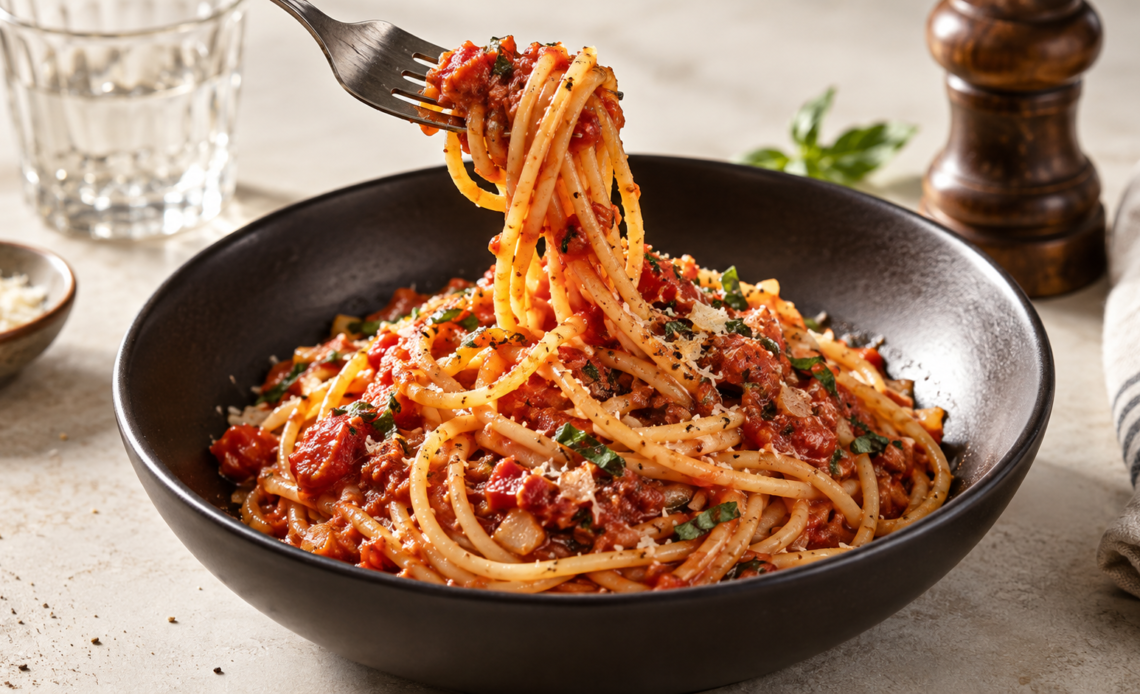
This Amatriciana Recipe is made up of crisp guanciale, a simple tomato sauce, a small amount of chilli and some sharp pecorino Romano; the fat from the guanciale forms the base of the sauce and the starchy water from the pasta helps it stick to the noodles; it takes around 40 minutes.
What Is Amatriciana?
Pasta all’amatriciana originates in the Italian town of Amatrice in central Italy and is now a standard part of Roman cuisine. It consists of guanciale (cured pork jowl), pecorino Romano, tomatoes and chilli and is served with spaghetti or bucatini. It is closely related to pasta alla gricia, which is the same dish without the tomato.
Why You’ll Love This Recipe
•Ready in about 40 minutes with few ingredients
•Deep, savoury flavour from crisp guanciale
•A balanced tomato sauce with gentle heat
•Simple technique with restaurant-style results
•Easy to scale for a family or a crowd
•Classic Italian flavour without fuss
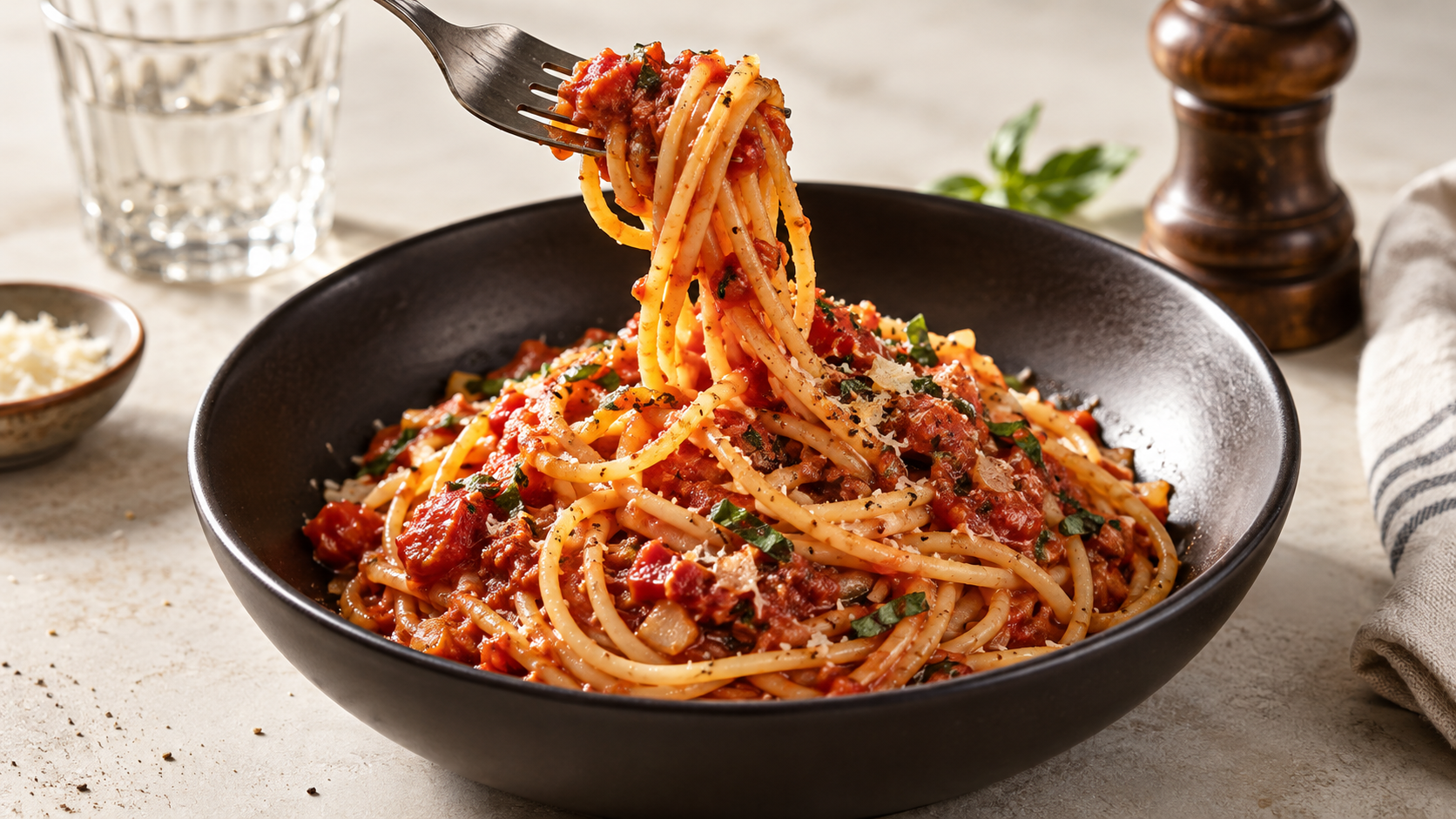
Amatriciana Recipe (Rich, Savory & Ready in 40 Minutes)
Ingredients
Method
- Place the guanciale in a broad skillet that is cold and heat it over medium-low heat, stirring from time to time, until it is golden and crisp on the edges. Using a slotted spoon, transfer it to a plate and leave the fat in the pan.
- And then add the red pepper flakes to the warm fat, stirring for 30 seconds until they are fragrant.
- In the wine, scraping up any browned bits and then simmers for two minutes until the smell of the alcohol has disappeared.
- And, by hand, crush them in the pan along with their juice. Then add a small amount of pepper and a pinch of salt. Cook them over a low to medium heat for 15 to 20 minutes, stirring from time to time, until they have thickened.
- To a boil in a pan of well-salted water, cooking it until it is 1 minute before it reaches an al dente consistency, and then set aside 1/2 cup of the water before draining it.
- Most of the guanciale back into the sauce, adding the pasta and a little pasta water, and then mix them together over medium heat for 1 to 2 minutes.
- Remove the pan from the heat, add the pecorino and if necessary mix it in with some more pasta water. Then serve it with the remaining guanciale and cheese on top.
- •If you can, use guanciale since its flavour is essential to the dish; pancetta is then the nearest alternative.
- Begin in a pan that is cold. The fat will then melt slowly rather than catch fire.
- •Select canned tomatoes that are of good quality; San Marzano tomatoes are sweet and have a low acid content.
- Break the tomatoes by hand since the result will have a more rustic texture than that obtained with a blender.
- •Save the water from the pasta since the starch in it makes the sauce smooth and enables it to stick.
- •Remove the cheese from the heat. This will help to prevent clumping.
- Serve it with a simple green salad and some crusty bread and a glass of red wine, which is traditional.
- —There is no need to use guanciale; instead use pancetta or thick-cut bacon.
- •Make it spicier. Add more chilli flakes or a diced fresh red chilli.
- When using onions, many Roman cooks would first sauté some finely diced onions in the fat before adding the tomatoes.
- Rigatoni has ridges which hold the sauce well.
- Bake by tossing the rigatoni in it, placing on top the pecorino and then baking it for 10 minutes.
- Gluten-free: use your favorite gluten-free pasta.
- You can keep the pasta and sauce together in a sealed container for a maximum of three days. The sauce itself can be frozen for up to three months; to thaw it, do so in the fridge overnight. Reheat it gently in a skillet over medium-low heat by adding a little water. Do not use high heat since this causes the cheese to clump.
- Carbonara consists of eggs, guanciale and pecorino and contains no tomato. Amatriciana on the other hand consists of tomatoes, guanciale and pecorino.
- Yes, but the fact is that bacon is smoked and this affects the flavour. Pancetta is more similar.
- As to whether amatriciana should contain onion or garlic, the traditional recipe from Amatrice includes neither of them, although in some Roman kitchens a small amount of onion is added. Go with whichever you like.
- Bucatini is the classic choice. Spaghetti and rigatoni will also do.
- Yes, you can prepare the sauce in advance; it is usually better the next day. When you’re serving the pasta, cook it fresh.
Notes