
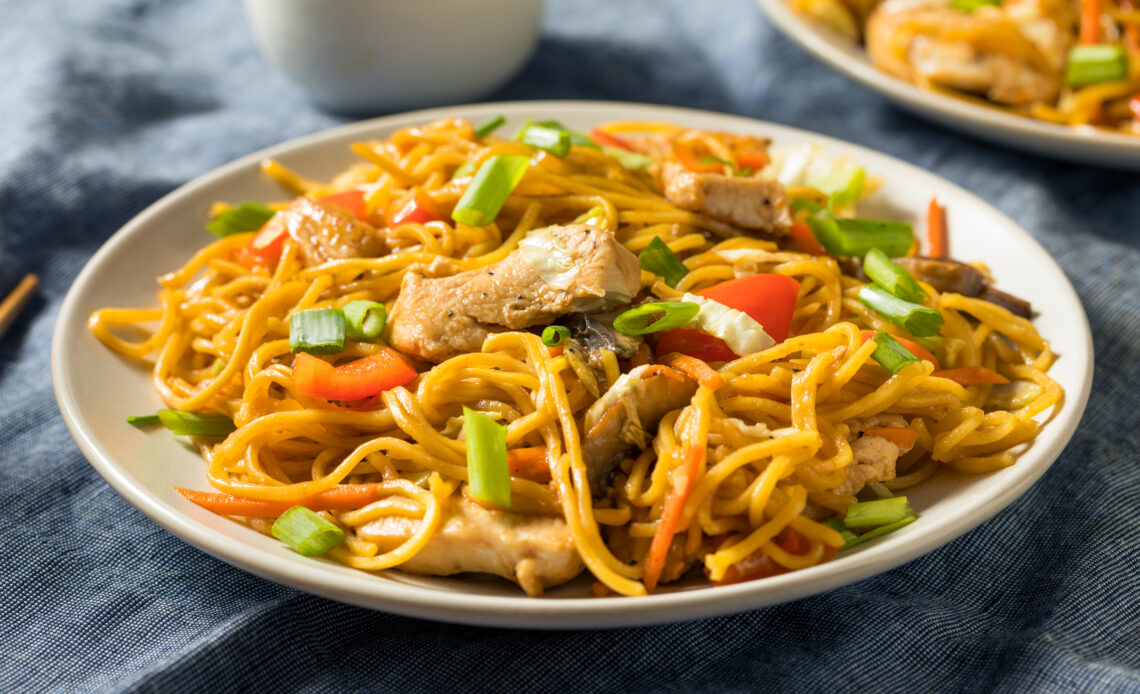
Chicken Chow Mein Recipe is one of the most popular noodle dishes worldwide, and this recipe demonstrates how little effort is needed to make it taste better than food bought from a takeaway. It features tender chicken, crunchy vegetables and springy noodles all coated in a shiny sauce which is salty, slightly sweet and full of savoury flavour.
What makes this recipe special is the method used. The chicken is marinated for a short time so that it remains juicy, the noodles are boiled only until they reach an al dente consistency so that they don’t become soggy, and all the ingredients are cooked in stages using high heat so that each one retains its texture. The sauce is prepared in advance, meaning that the final mixing takes less than a minute. It takes about 30 minutes to go from chopping to serving, which is why it’s ideal for a busy weeknight or for a family dinner.
What is chicken chow mein?
The phrase Chow mein is equivalent to “stir-fried noodles” in Cantonese; the dishoriginated in China and has since become a standard item in Chinese restaurants all over the world. Egg noodles are stir-fried with some vegetables and a protein before being seasoned with soy sauce and a number of other simple sauces. Different areas have their own particular way of preparing it, ranging from soft, saucy noodles to crispy, pan-fried ones. The one described here is the common home-style recipe: it is soft, saucy and colourful.
Why You’ll Love This Recipe
Ready in just 30 minutes
Juicy chicken and crisp-tender vegetables in every bite
Rich, glossy sauce made from simple pantry ingredients
Easy to customise with whatever vegetables you have
Cheaper and fresher than ordering out
Great for leftovers and lunchboxes
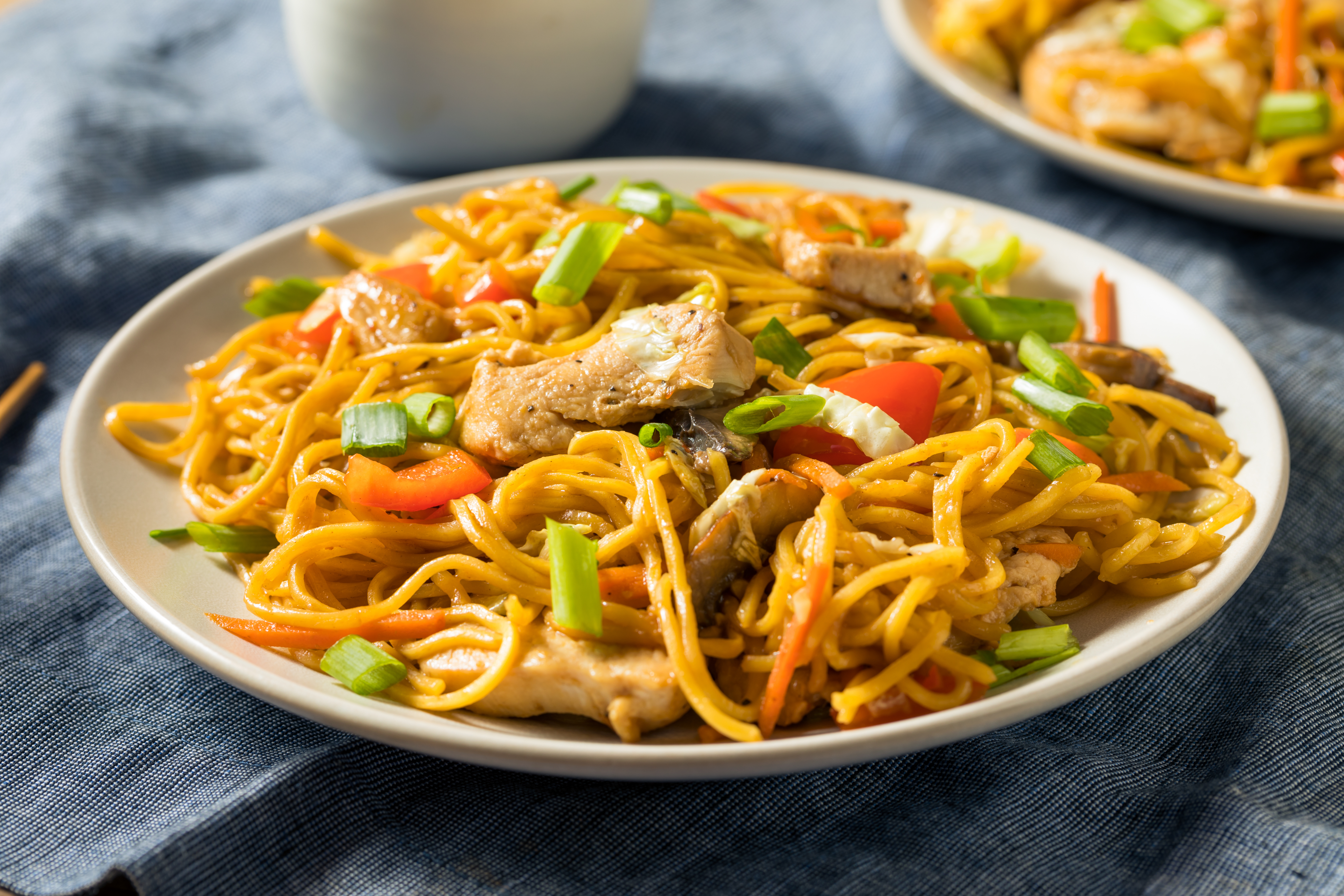
Chicken Chow Mein Recipe: Easy, Saucy & Better Than Takeaway
Ingredients
Method
- Put the sliced chicken into the soy sauce, cornstarch and pepper and let it stand for 10
- minutes; the cornstarch coating ensures that the meat remains tender and juicy when it
- is heated in the pan.
- In the meantime, boil some water and cook the noodles according to the instructions in
- the packet, for about 3 to 4 minutes, until they are just al dente. After cooking, drain them
- and rinse them briefly under cold water to halt the cooking process, then mix them over
- with a teaspoon of oil so that they won’t stick together. Mix all the sauce ingredients
- together in a small bowl.
- Put one tablespoon of oil into a large wok or skillet and heat it over high heat. Add the
- chicken, placing it in a single layer, and cook for 4 to 5 minutes until it is golden and fully
- cooked. Take the chicken off and put it on a plate.
- Put in another tablespoon of oil into the pan. Stir-fry the garlic and ginger for 30 seconds,
- after which add the carrot, bell pepper and mushrooms and cook them for 2 to 3 minutes.
- Then add the cabbage and cook it for one more minute. The vegetables should remain
- bright and slightly crunchy.
- Put the noodles, chicken and sauce into the pan and use the tongs to mix everything
- together for 2 to 3 minutes until the noodles are evenly coated and have been heated
- through. Then add the spring onions, taste the dish and if necessary adjust the
- seasoning with a bit more soy sauce or pepper. Serve it straight away while it’s hot.
- Do not boil the noodles for too long since they will continue to cook in the pan; therefore,
- stop boiling them when they still have a little bite.
- Apply a high heat; a pan that is very hot imparts a slightly smoky, restaurant-style flavour
- to the noodles and the vegetables.
- Prepare the food in stages; if you put too many ingredients in the pan at once they will
- steam rather than fry.
- Cut everything as thinly and evenly as possible so that it cooks quickly and at the same
- speed.
- Start by mixing the sauce. After the wok has been heated, there isn’t a chance to
- measure the bottles.
- After draining the noodles, make sure to dry them well because the extra water will thin
- the sauce.
- Instead of using chicken, use thin strips of beef or peeled shrimp.
- For vegetable chow mein, instead of using chicken add tofu, broccoli and baby corn.
- For spicy chow mein, add chilli sauce or some fresh sliced chillies together with the
- garlic.
- To make egg chow mein, scramble the eggs in the pan first then add the noodles.
- For a gluten-free option, use rice noodles and tamari in place of soy sauce.
- For the crispy noodle style, first pan-fry the cooked noodles in a small amount of oil until
- they are golden at the edges.
- Leave the chow mein to cool before putting it into a sealed container and storing it in the
- refrigerator where it will last for up to three days. When you want to reheat it, stir-fry it in
- a hot pan with a little water or a drizzle of oil for 2 to 3 minutes since this method restores
- the texture far better than using a microwave. It is not advisable to freeze it as the
- noodles and vegetables will lose their texture.
- Egg noodles which are either fresh or dried and marked ‘chow mein’ are best, and
- spaghetti or ramen noodles (without the flavour packet) will also do satisfactorily.
- They might have been overcooked or hadn’t been rinsed; cook them until they are al
- dente, rinse them, and then toss them with a little oil.
- Thinly slice it, marinate it using cornstarch, and cook it rapidly over high heat without
- overcrowding.
- Alright, add a bit more soy sauce and a little sugar, or use a splash of hoisin sauce.
- Chow mein noodles are stir-fried until they are slightly crisp at the edges, whereas lo
- mein noodles are boiled and then gently tossed in sauce, which makes them softer.
- The vegetables and chicken can be cut up and the sauce mixed a day in advance, and
- the noodles can be cooked and the stir-frying done just before serving.
Notes