
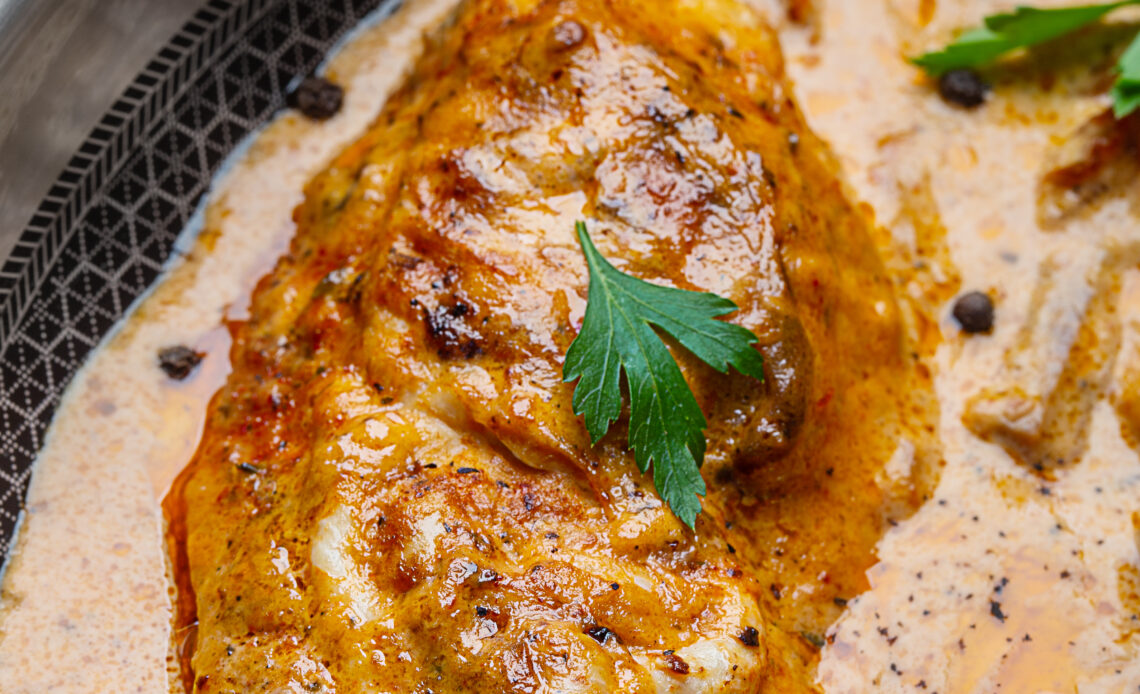
If you’ve at any time wanted to enjoy a French bistro meal without having to pay the bistro price, then this chicken au poivre recipe is the one worth trying. Tender chicken breasts are covered with cracked black pepper, seared until they turn golden, and then finished off in a smooth cream sauce with a little brandy. It has the flavour of a dish served on a special occasion, yet it can all be prepared in one pan in around 30 minutes.
Poivre is normally considered to be a French dish made with steak, but chicken is suitable as well. It is lighter in texture, requires a shorter cooking time, and allows the spicy cream sauce to be the star. The dish can be served on a weeknight or when entertaining, and it will please in either case.
What is Chicken au Poivre?
“Au poivre” is French for “with pepper”. To prepare the dish, the crushed peppercorns are pressed onto the meat and then it is seared in a hot pan. The pan is deglazed using brandy or cognac and cream is then added to produce a rich sauce. The pepper provides a sense of warmth and a mild heat, whereas the cream and the brandy give a smooth, slightly sweet ending to the dish.
Why You’ll Love This Chicken au Poivre
• Ready in 30 minutes, which makes it perfect for busy evenings
• One pan, so cleanup is easy
• Bistro-style flavor from just a handful of ingredients
• Juicy chicken with a crisp, peppery crust
• Flexible, since you can adjust the heat and swap the alcohol
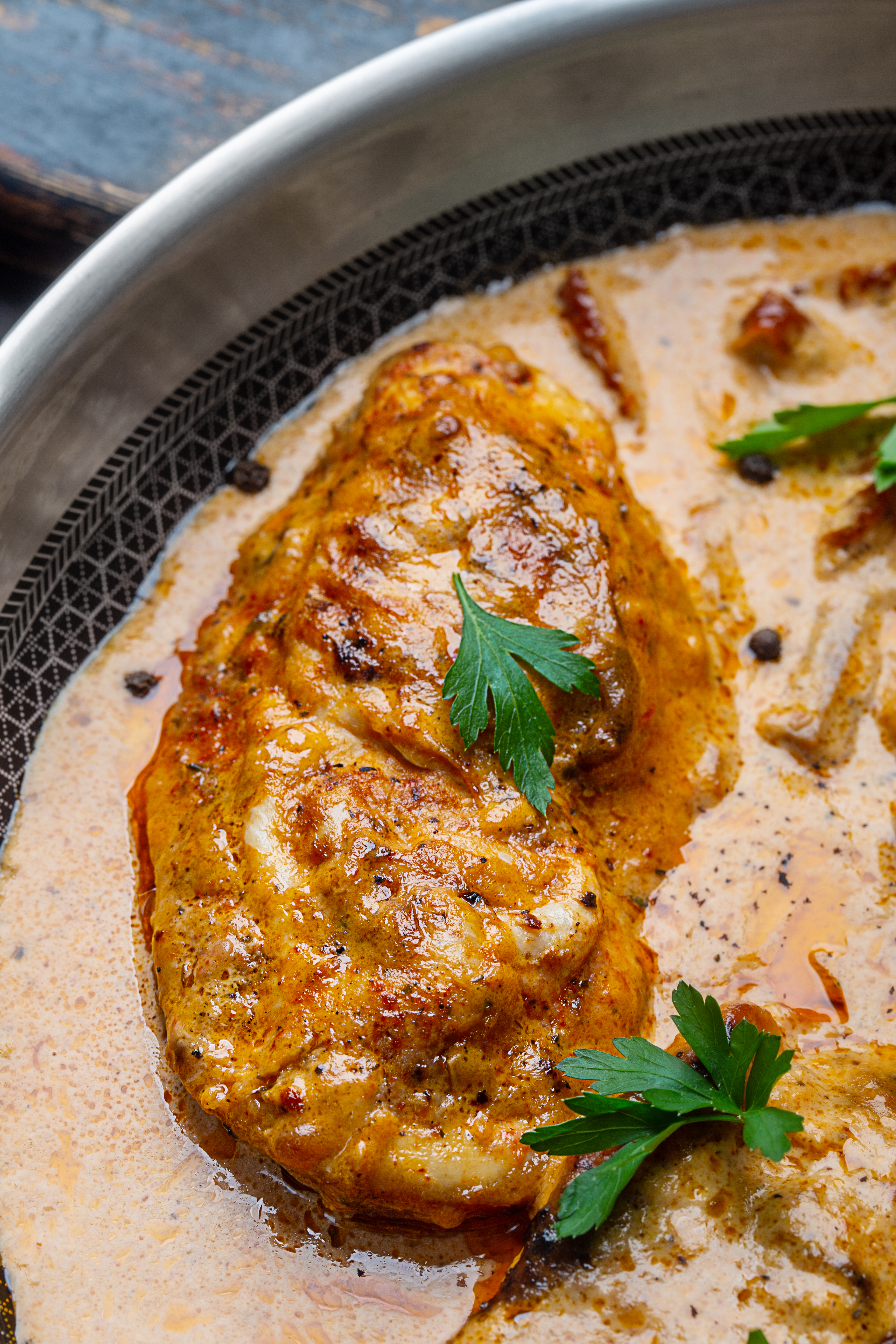
Chicken au Poivre Recipe: Creamy Pepper Sauce Ready in 30 Minutes
Ingredients
Method
- The chicken ready by placing the chicken breasts between two sheets of
- parchment or plastic wrap and then beating them until they are about 2 cm (¾ inch) thick. This will
- ensure that they cook evenly and remain juicy. After that, dry the chicken thoroughly and season both
- sides with salt.
- By using a mortar and pestle, or alternatively place the peppercorns in a
- bag and crush them with the bottom of a heavy pan. You should achieve a coarse, cracked texture
- rather than a fine powder, and then press the pepper firmly into both sides of the chicken.
- Put the oil and one tablespoon of butter into a large skillet and heat
- them over medium-high heat. Add the chicken and cook it for 5 to 7 minutes on each side, until it is
- deeply golden and fully cooked. The internal temperature must reach 74°C (165°F). Remove it and
- place it on a plate, then cover it loosely with foil.
- By reducing the heat to medium and then adding the rest of the butter to the
- pan. Add the shallots and cook for two minutes, stirring frequently, until they have softened. Then add
- the garlic and cook for another 30 seconds.
- To deglaze the dish. Before adding the brandy, take the pan off the heat. Pour in
- the brandy and then put the pan back on the heat, scraping up the bits that have browned at the
- bottom. Let it boil for about a minute until the liquid has reduced by half; be careful since the alcohol
- can ignite near a gas flame.
- By adding the chicken stock and then simmersing it for 3 to 4 minutes until it has
- decreased by about a third. Then stir in the cream and the Dijon mustard and gently simmer for
- another 3 to 4 minutes until the sauce sticks to the back of a spoon.
- The dish by putting the chicken and any of the juices that have collected
- during resting back into the pan. Pour the sauce over it and heat it through for one minute. Then
- decorate it with parsley and serve immediately.
- Make sure you crack the pepper yourself since pre-ground pepper has a flat and dusty flavour; it is
- only freshly cracked peppercorns that provide the aromatic heat which characterises this dish.
- Beat the chicken all over so that it’s even. Thin and uniformly cut cutlets cook quickly and won’t dry
- out; thick breasts can be cut in two horizontally instead.
- Do not move the chicken when searing since leaving it in place allows a golden crust to develop. If it
- sticks, then it isn’t ready to be turned.
- Use a heavy-bottomed skillet; stainless steel or cast iron will produce those browned bits (the fond)
- which give flavor to the sauce, whereas non-stick pans brown poorly.
- Do not boil the cream, only simmer it; a gentle heat will keep the sauce smooth and stop it from
- splitting.
- Taste and adjust the amount of pepper. Begin with one tablespoon if you want a mild sauce and
- increase it to one and a half tablespoons if you prefer a stronger flavour. Also, discard any extra
- crumbs before searing as this will have the effect of reducing the spice.
- Give the chicken a short rest. Covering it with foil for five minutes helps to keep the juices in the meat
- rather than having them end up on the cutting board.
- Rich, creamy sauces call for simple sides that soak them up:
- Creamy mashed potatoes or buttery baby potatoes
- Crispy French fries, for the classic bistro pairing
- Steamed green beans or asparagus
- A crisp green salad with a sharp vinaigrette
- Crusty bread to mop up the sauce
- Buttered egg noodles or rice
- A dry white wine, for example Chardonnay, or a light red wine such as Pinot Noir, is suitable to serve
- with this dish.
- If you want to make it alcohol-free, omit the brandy and instead use an additional ¼ cup of stock
- along with 1 teaspoon of lemon juice or apple cider vinegar.
- For a lighter sauce, substitute half of the cream with whole milk or use half-and-half.
- If you want to make it dairy-free, use full-fat coconut cream and olive oil, although the result will be
- a bit sweeter.
- Mushroom au poivre: Cook 200 g sliced mushrooms with the shallots for a richer sauce.
- For the green peppercorn version, add one tablespoon of green peppercorns that have been
- drained in order to achieve a milder and more floral flavour.
- Boneless thigh quarters are suitable. Cook them for 6 to 8 minutes on each side.
- You can keep leftovers in a sealed container in the fridge for a maximum of three days. To reheat
- them, place them in a skillet and cook gently over low heat, adding a little stock or cream to help
- loosen the sauce. Do not reheat them in the microwave at high power because this can cause the
- chicken to become rubbery and may split the sauce. Since cream sauces do not freeze well, it is best
- to eat this dish fresh.
- As a temporary substitute you can use dry white wine, chicken stock mixed with a bit of lemon juice,
- or add a little apple juice.
- It has a peppery taste, but is not spicy; the cream reduces the heat and allows you to control it by the
- quantity of pepper you use.
- Alright, prepare it a day in advance and then reheat it gently before adding the chicken that has just
- been cooked.
- It probably wasn’t boiled lightly enough or the cream had been added to a pan that was too hot.
- Reduce the heat and stir gently.
- Freshly cracked whole black peppercorns have the best flavour and Tellicherry peppercorns are a
- good choice if they can be found.
- The recipe serves 4
Notes